
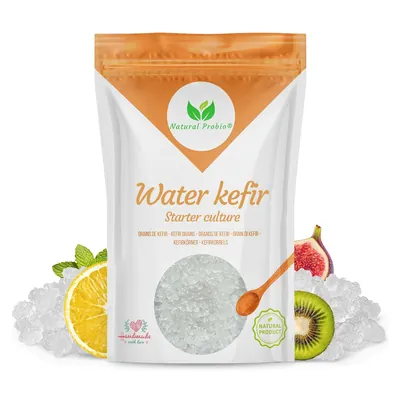
 Water kefir
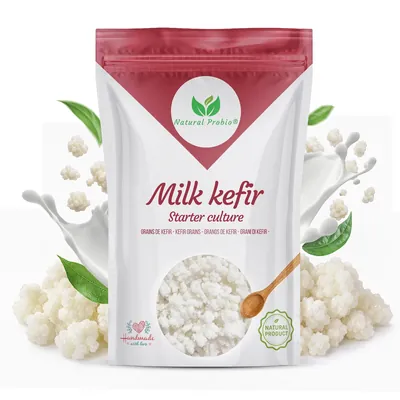 Milk kefir
 Kombucha
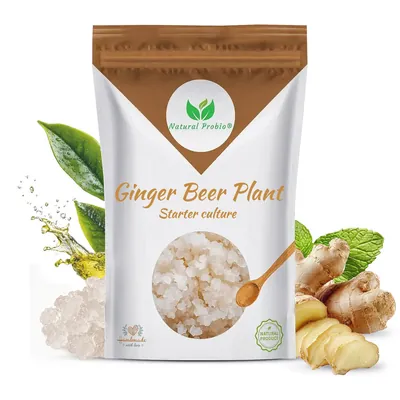 Ginger beer
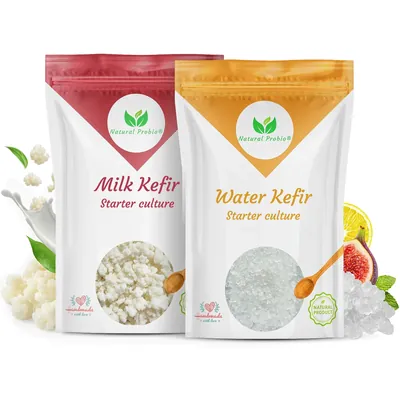 Kefir duo
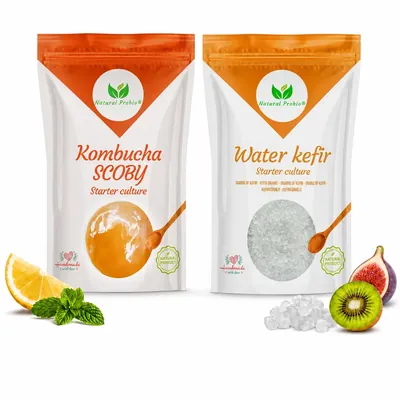 Kefir and kombucha
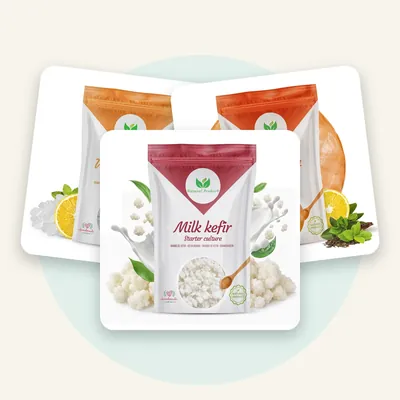 Starter kit
 Rennet
Brew 3 tea bags (about 8 g of loose tea) in 1 litre of water, stir in 80 g of sugar and let it cool to room temperature. Pour it into a glass jar, add 1 SCOBY and 1 cup of starter liquid (about 250 ml), cover with a cloth and leave it for 7 to 10 days at 20 to 25°C. When it tastes pleasantly tart, bottle it with some fruit for 2 to 5 days to build the fizz, then chill. The SCOBY goes straight into the next batch.
What is kombucha?
Kombucha is sweetened tea that has been fermented by a living culture. Over a week or so, the sugar is eaten up and the tea turns into a sharp, lightly sparkling drink with a flavour somewhere between cider, apple juice and a dry white wine. Bottled with a little fruit, it becomes properly fizzy.
The bottles in the fridge at the supermarket give you an idea, but homemade kombucha is a different thing: fresher, livelier, and entirely to your own taste. You decide how sweet or sharp it is, which tea goes into it and what fruit ends up in the bottle. Like every homemade fermented drink, it contains traces of alcohol, usually under 1%. How much, and what affects it, is explained in How much alcohol is in kombucha?
SCOBY, kombucha mother, kombucha mushroom
The culture that does the work is a SCOBY, short for "symbiotic culture of bacteria and yeast". It is a pale, rubbery disc that floats on the tea and takes the shape of the jar. You will also hear it called a kombucha mother or, less accurately, a kombucha mushroom: it is not a mushroom at all, but the name has stuck.
The SCOBY never works alone. It always comes with starter liquid, some already fermented kombucha that makes the new tea acidic from the first hour and gives the culture a head start. That is why our kombucha SCOBY is sent with its own starter liquid. Every batch, the SCOBY grows a new layer, so after a few weeks you have more than you started with. What a SCOBY is made of, how it grows and what it should look like are in the guide What is a kombucha SCOBY?
The tea you already have
Here is the nice thing about kombucha in Britain: you do not need to buy a special tea. The strong black breakfast tea that most households go through by the box, the one behind every proper brew and every cuppa at the kitchen table, is an excellent place to start. It gives a rich, amber kombucha with a full, rounded flavour, and the SCOBY thrives on it.
| Tea | Kombucha you get | Good to know |
|---|---|---|
| Black breakfast tea | Amber, full, rounded | The classic, and the easiest to get right |
| Green tea | Pale, lighter, a bit grassy | Lovely in summer, slightly faster |
| Half black, half green | Balanced, fresh | A good everyday compromise |
| Oolong, white tea | Delicate, fragrant | For when you want to experiment |
| Teas flavoured with oils (such as bergamot) | Unpredictable | Best avoided: the oils can upset the SCOBY |
| Herbal and fruit infusions | Variable | Not on their own; add them in the second fermentation |
Use 3 tea bags or about 8 g of loose tea per litre, and let it steep for 10 to 15 minutes so the brew is good and strong. Plain cheap tea works just as well as an expensive one. Which teas to choose, how to blend them and why flavoured teas are better kept for the second fermentation are covered in The best tea for kombucha.
What you need
| Ingredient or equipment | Quantity | What it is for |
|---|---|---|
| Kombucha SCOBY with starter liquid | 1 SCOBY + 1 cup (about 250 ml) | The live culture and its head start |
| Black or green tea | 3 tea bags (about 8 g loose) | The base of the brew |
| Granulated white sugar | 80 g | Food for the culture |
| Water | 1 litre | Boiled for the tea, then cooled |
| Glass jar | 1.5 to 2 litres, wide neck | Room for the SCOBY to spread |
| Cloth or kitchen paper and an elastic band | 1 | Lets air in, keeps fruit flies out |
| Swing-top bottles | 1 litre in total | For the second fermentation |
The basic method
1. Make sweet tea
Brew 3 tea bags in about half a litre of just-boiled water for 10 to 15 minutes. Take them out and stir in 80 g of sugar until it dissolves.
2. Cool it right down
Top up with cold water to 1 litre and wait until the tea is at room temperature. Hot tea harms the SCOBY.
3. Add the culture
Pour the cool tea into the jar, add the starter liquid and lay the SCOBY on top. Cover with the cloth and an elastic band.
4. Wait and taste
Leave it for 7 to 10 days at 20 to 25°C, out of the sun. From day 6, taste it with a straw slipped down the side.
When it tastes pleasantly tart with a little sweetness left, it is ready. Keep a cup of it back as starter liquid for the next batch, and the SCOBY goes straight into fresh sweet tea. Everything step by step, with the reasons behind each one, is in How to make kombucha.
The second fermentation: fruit and fizz
Straight from the jar, kombucha is only slightly sparkling. For real bubbles you bottle it: pour it into swing-top bottles with some fruit, juice or ginger, close them and leave them at room temperature for 2 to 5 days. The remaining yeast feeds on the fruit sugar, and because the bottle is closed, the gas stays in the drink. Then into the fridge.
- A few slices of fresh ginger and lemon zest: sharp and warming. See Ginger and lemon kombucha.
- A handful of hedgerow blackberries in September, or raspberries in summer: deep red and fruity. See Berry kombucha.
- Apple juice and a cinnamon stick: autumn in a glass. See Apple and cinnamon kombucha.
How much fruit to use, which bottles hold the pressure and how to avoid a fountain when you open them are all in Kombucha: the second fermentation.
Mould or normal?
This is the question every new kombucha brewer asks at least once. A SCOBY does strange-looking things: brown strings hanging underneath, a new pale skin forming on top, bumps, holes and a bit of sediment at the bottom. All of that is normal, and a sign of a lively culture.
| Normal | Mould: throw it out |
|---|---|
| Brown or dark strings hanging from the SCOBY | Dry, fuzzy spots on the surface |
| A thin, pale, smooth new layer on top | Blue, green, black or white powdery patches |
| Bumps, holes, uneven patches | Circles that look like mould on bread |
| Sediment at the bottom of the jar | A musty smell instead of a vinegary one |
Mould is rare when the brew is acidic from the start, which is exactly what the starter liquid is for. It is more likely in a cold, damp room, so keep the jar somewhere warm and dry. Photos and a full list of what to look for are in Kombucha: mould or normal?. If you are unsure, send us a photo through the contact page.
Too sour, too sweet, too flat
Kombucha keeps fermenting as long as you leave it, so the most common complaint is that it has gone too sour. The fix is simple: bottle it sooner next time, or use a cooler spot in summer.
| What you notice | Usually because | What helps |
|---|---|---|
| Very sour, like vinegar | Left too long or too warm | Bottle 2 or 3 days earlier |
| Still very sweet after 10 days | Too cold, not enough starter | A warmer spot, a full cup of starter liquid |
| No fizz in the bottle | Too short, not enough fruit, a loose seal | Longer second fermentation, a little more fruit, a better bottle |
| A strong yeasty taste | Lots of yeast sediment, a warm room | Strain before bottling, leave the bottom of the jar behind |
The full guide is Kombucha too sour?. And a jar that has gone well past drinking is not wasted: it makes a fine vinegar for salad dressings, explained in Kombucha vinegar. For a quick start, try the kombucha vinaigrette.
The SCOBY hotel: spares and breaks
Each batch gives you a new SCOBY layer, and after a month or two you will have more than you need. Rather than throwing them away, keep them in a SCOBY hotel: a jar with your spare SCOBYs covered in plenty of kombucha, closed with a cloth and kept at room temperature. Top it up with sweet tea every few weeks and it looks after itself.
The hotel is also your insurance. If something goes wrong with a batch, or you go on holiday, you always have a lively spare SCOBY and a supply of strong starter liquid. How to set one up and keep it are in The SCOBY hotel. If even the hotel is full, Too many SCOBYs? has ideas for the spare layers.
For a short break of a week or two, you do not even need a hotel: make a fresh batch before you leave and it will simply be a bit more sour when you get home.
A kombucha routine that works
Most people settle into a weekly rhythm. On a Sunday evening, while the kettle is on for the tea anyway, you bottle last week's kombucha with fruit, keep a cup back, and set a new batch going. By Wednesday the bottles are fizzy and go in the fridge, and by the following Sunday the jar is ready again.
If you drink more than a litre a week, run two jars a few days apart, or make a bigger batch: double everything (2 SCOBYs or one large one, 2 cups of starter, 6 tea bags, 160 g sugar, 2 litres of water) in a larger jar. Keep the jar out of the sun, away from the cooker, and away from other ferments, so they do not mix.
What a litre of homemade kombucha costs compared with a bottle from the shop is worked out in The cost of making kefir at home, which has a chapter on kombucha.
Buying a kombucha SCOBY
Shops sell bottled kombucha, ready to drink. A live SCOBY with starter liquid, the thing you need to brew your own, is what we send. Our kombucha SCOBY (£16) arrives with its starter liquid, instructions and recipes. Our cultures come from traditional methods: unique and vigorous.
Pay by Visa or Mastercard debit or credit card, Apple Pay, Google Pay, PayPal or Klarna (pay in 3). Standard tracked delivery costs £4.90 and is free from £35 (3 to 6 working days across the UK), and express tracked delivery costs £14.90 (3 to 5 working days, with Royal Mail on the last leg). All prices include VAT. The details are on Delivery and payment.
The SCOBY travels in a sealed pouch with its starter liquid and copes well with a few days in the post. When it arrives, open the parcel and, ideally, brew your first sweet tea the same day. If you cannot start straight away, keep the SCOBY in its pouch in the fridge: it will happily wait two to three days.
Kombucha or kefir?
Kombucha is a weekly ferment: sharp, tea-based and good with food. Water kefir is a daily one: fruitier, lighter, ready in 24 hours. Milk kefir is creamy and belongs at breakfast and in baking. A ginger beer plant sits somewhere in between: two days in the jar, two in the bottle, and a spicy fizz. The differences in taste, rhythm and effort are set out in Kefir or kombucha?
Many people end up with both. The water kefir and kombucha set gives you a SCOBY and 30 g of water kefir grains, and saves you £4 compared with buying them separately. The two sit happily side by side on the worktop: the kefir jar is strained every day, the kombucha jar is left alone for a week. The complete fermentation starter kit adds milk kefir too, and saves you £7. If you cannot decide, Which ferment suits me? sorts it out in two questions, and Fermented drinks for beginners is a good place to start.