
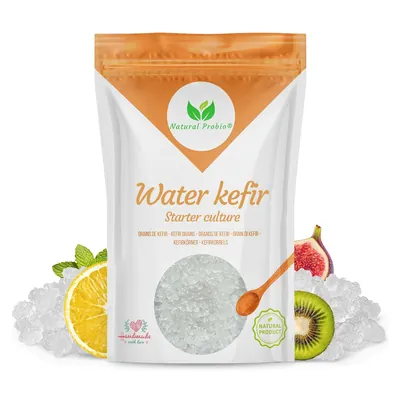
 Water kefir
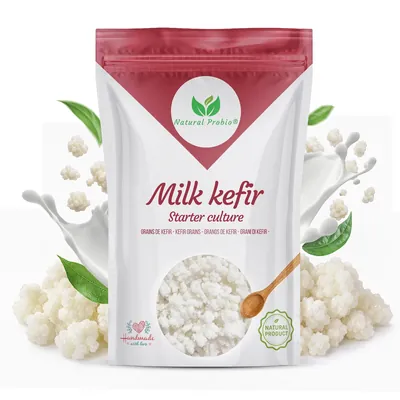 Milk kefir
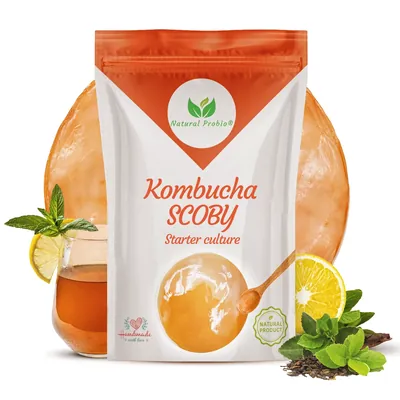 Kombucha
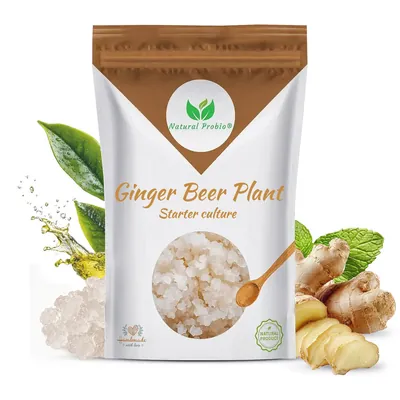 Ginger beer
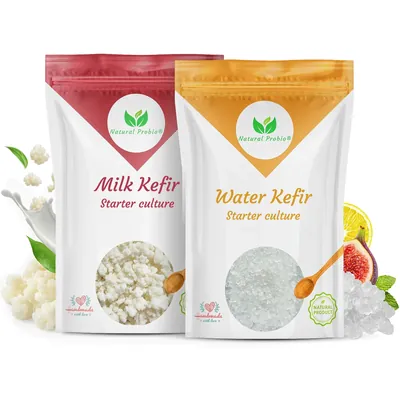 Kefir duo
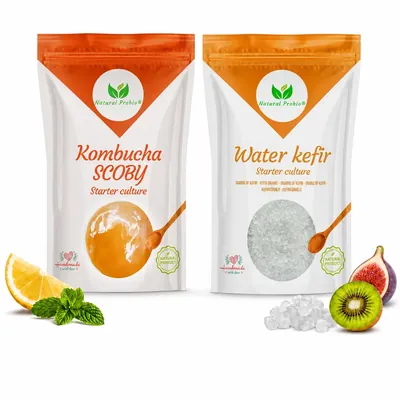 Kefir and kombucha
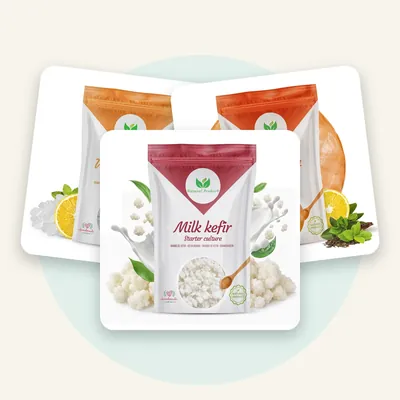 Starter kit
 Rennet
A SCOBY is a living culture of acetic acid bacteria and yeasts, held together in a firm, rubbery skin. In sweetened tea they turn sugar into mild acids, flavour and a little gas: that is kombucha. The name is short for "symbiotic culture of bacteria and yeast". You will also hear it called a kombucha mother or a kombucha mushroom, though it is no mushroom at all. One SCOBY, a cup of starter liquid, 80 g of sugar and 3 tea bags make 1 litre per batch, and every batch grows a new layer.
One culture, several names
The word SCOBY sounds technical, and it is: it stands for symbiotic culture of bacteria and yeast, a community of bacteria and yeasts that depend on each other. Other names are in use too:
| Name | Where you come across it |
|---|---|
| SCOBY | The usual name, on recipes and packaging |
| Kombucha mother, mother | Especially for the old, thick layer that new ones grow from |
| Kombucha mushroom, tea fungus | Older names, still common in books and in conversation |
| Baby, daughter | The new layer that forms on top with every batch |
| Kombucha starter | Sometimes the SCOBY and its liquid together |
They all mean the same thing. It is not a mushroom or a fungus in the garden sense: there are no spores or mushroom threads in it. The name simply stuck because the skin looks a little like something you might find growing in a wood.
What it looks and feels like
A SCOBY is a flat, round or irregular disc, usually from half a centimetre to a few centimetres thick. It feels firm, smooth and a little slippery, a bit like a cold set custard with a tough skin. The colour ranges from cream to light brown, and an old layer can be dark brown.
You will often see brown specks in it, and brown or almost black strings hanging from the underside. Those are yeasts. Sometimes there are holes or bumps, or several layers have grown together. All of that is part of a living culture. What is and is not normal is set out with plenty of examples in Kombucha: mould or normal?
In its liquid, a SCOBY smells fresh and sour, somewhere between cider vinegar and a dry cider.
What happens in the jar
Two groups work together in a SCOBY. The yeasts break down the sugar in the tea and turn it into gas and a very small amount of alcohol. The acetic acid bacteria turn that into mild acids, which give kombucha its fresh, sharp taste. As with every homemade fermented drink, only traces of alcohol remain, usually under 1%. The details are in How much alcohol is in kombucha?
The bacteria also make something you can see with the naked eye: cellulose, the material the skin is made of. That is why a new layer grows at the surface with every batch, where the bacteria have air. So the skin is not only the culture, it is also the house the culture builds for itself.
Just as important is the liquid the SCOBY sits in. It is full of the same bacteria and yeasts, and it is already acidic. A cup of that starter liquid makes fresh tea acidic enough straight away to keep unwanted visitors out. That is why a SCOBY always belongs with its starter liquid, and why ours always comes with it.
What a SCOBY needs
| It likes | It does not like |
|---|---|
| Tea from the tea plant: black, green, white, oolong | Flavoured teas, essential oils |
| Ordinary sugar, 80 g per litre | Sweeteners with no real sugar |
| 20 to 25°C and a quiet spot | Direct sun, cold, a windowsill in winter |
| A wide-mouthed glass jar | A tight lid during the first fermentation |
| A cup of sour starter liquid per litre | Hot tea |
Which tea gives the nicest kombucha is in The best tea for kombucha. Good news on that front: the strong breakfast tea you make by the mugful is one of the best. The full recipe is in How to make kombucha.
A SCOBY grows with you
With every batch a new layer forms on top. Sometimes it grows onto the old one, sometimes it lies loose above it. After a few weeks you have a thick stack of layers, or a few separate SCOBYs.
You do not need to keep them all in the jar. One or two young, pale layers are plenty for a litre. The rest can wait in a SCOBY hotel, a separate jar of sour kombucha, where you always have a spare and some strong starter liquid. If you really have too many, Too many SCOBYs? has ideas for the kitchen and the garden.
Old, dark layers slowly become less active. You will not notice it in one batch, but you will if you keep using them for months. So now and then, retire the mother and carry on with one of her younger daughters.
Handling your SCOBY
- Use clean, dry hands, or a clean wooden or plastic utensil. Soap residue on your hands is not welcome.
- Rest it on a clean plate while you pour off the batch, and put it back into fresh tea the same day.
- Never rinse it in water or with washing-up liquid. If it needs a rinse, use a little finished kombucha.
- You can cut it with clean scissors or a clean knife. Each piece with a cup of starter can begin its own batch, although a small piece will be a little slower the first time.
Fresh or dried?
SCOBYs are sent out in different ways. Dried cultures need a few batches to get going. A fresh SCOBY in its own starter liquid can go to work straight away, and your first litre is usually ready after 7 to 10 days. That is how ours arrives: in a well-sealed pouch with starter liquid, made for the post. Our cultures come from traditional methods: unique and vigorous. When it arrives, keep the SCOBY cool in the fridge, in its liquid, until your first batch, and start as soon as you can.
SCOBY, kefir grains or ginger beer plant?
All of them are cultures of bacteria and yeasts, but they look and behave quite differently. A SCOBY is one flat skin that lives in sweet tea and works over a week. Water kefir grains are small translucent crystals that work in sugar water with a fig and a slice of lemon, and a batch is ready in 24 hours; milk kefir grains look like little cauliflower florets and work in milk. The ginger beer plant is a soft, crumbly culture that turns sugar water and fresh ginger into a fiery, fizzy ginger beer in a couple of days. You cannot swap one for another: each one needs its own drink. Which suits you best is in Kefir or kombucha?
A short history
Kombucha has been brewed for a very long time, particularly in East Asia and later in Russia and the countries around it, where a jar with a "tea mushroom" sat on many a kitchen counter. Pieces were passed from kitchen to kitchen, often with a handwritten recipe. Today you will find kombucha in bottles in the supermarket fridge. The live culture to brew it yourself is not on the shelf, and that is what makes the difference: homemade kombucha tastes of your tea and your kitchen, and you decide how sharp it gets.
Frequently asked questions
Is a SCOBY a mushroom?
How long does a SCOBY last?
How big does a SCOBY need to be for 1 litre?
Should I wash my SCOBY?
My SCOBY has gone very dark. Is it dead?
Want a SCOBY of your own? Our live kombucha SCOBY with starter liquid costs £16 and comes with instructions and recipes. For kombucha and water kefir together, see the water kefir and kombucha set, and for milk kefir as well, the complete fermentation starter kit. Everything about kombucha is on the kombucha page.