
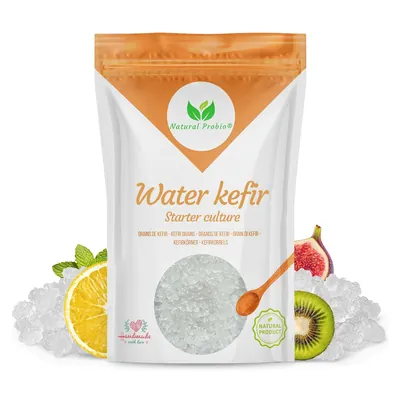
 Water kefir
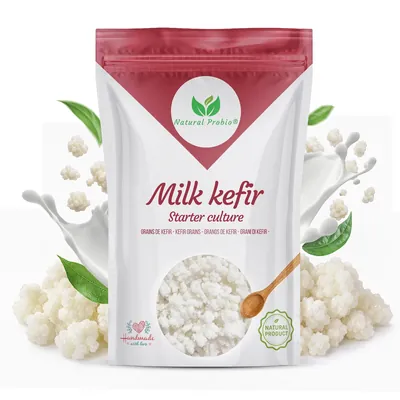 Milk kefir
 Kombucha
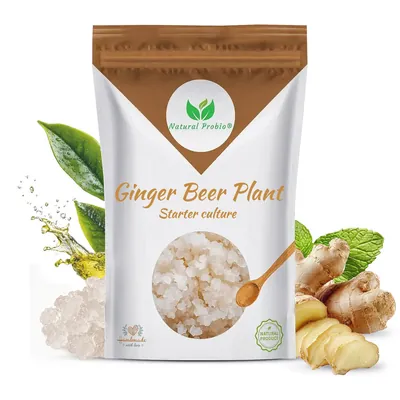 Ginger beer
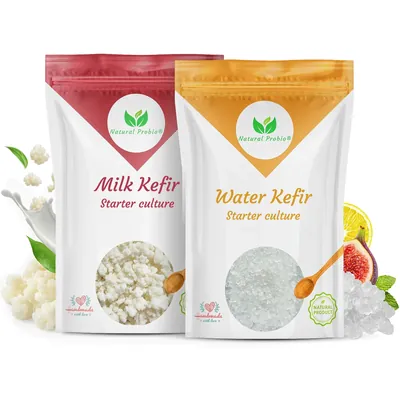 Kefir duo
 Kefir and kombucha
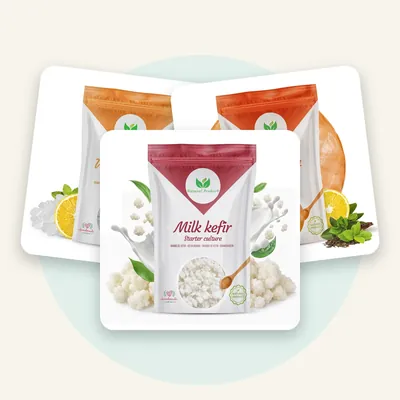 Starter kit
 Rennet
For 1 litre of kombucha you need 3 tea bags (or about 8 g of loose tea), 80 g of sugar, a kombucha SCOBY and a cup of starter liquid, about 250 ml. Dissolve the sugar in the hot tea, let it cool to room temperature and pour it into a wide glass jar. Add the starter liquid and the SCOBY, cover with a cloth and leave it for 7 to 10 days at 20 to 25°C. Start tasting on day 7. When you like it, pour it off, keep a cup back and set the next batch going the same day.
What you need
Most of this is already in your kitchen. The one thing you cannot improvise is the culture itself.
- A kombucha SCOBY with its starter liquid. The SCOBY is the pale, rubbery disc that turns sweet tea into kombucha. The starter liquid is finished, tart kombucha from an earlier batch. You need both, every time.
- Plain black or green tea, 3 bags per litre. The everyday breakfast tea in your cupboard is ideal, as long as nothing has been added to flavour it. How each tea changes the result is explained in The best tea for kombucha.
- Sugar, 80 g per litre. Ordinary white sugar is the most reliable; cane sugar gives a faint caramel note.
- A wide-necked glass jar of 1.5 to 2 litres. A large preserving jar without its lid is perfect.
- A clean tea towel, a square of muslin or a sheet of kitchen paper, and an elastic band.
- Two or three swing-top bottles for when the kombucha is ready.
Stick to glass for the fermentation itself. Kombucha is acidic, and a week in a plastic tub or a metal pot can leave an odd taste behind. A quick stir with a stainless steel spoon is no problem at all.
Step by step
1. Make the tea
Boil about half a litre of water, take it off the heat and drop in the 3 tea bags. Leave them for 10 to 15 minutes for a good strong brew, then lift them out.
2. Dissolve the sugar
Stir the 80 g of sugar into the hot tea until there are no grains left on the bottom.
3. Top up and cool
Add cold water to make 1 litre and wait until it is at room temperature. Put your hand flat against the jar: it should not feel warm. Hot tea damages the culture.
4. Add the starter and the SCOBY
Pour the tea into the jar, then the starter liquid, and finally lay the SCOBY on top. Whether it floats, sinks or hangs sideways makes no difference.
5. Cover and leave it alone
Cloth over the top, elastic band around the neck. Never a tight lid: the first fermentation needs air. Put the jar somewhere quiet, out of direct sun, at 20 to 25°C.
6. Taste and pour off
From day 7, have a sip every day. When the balance of sweet and sharp suits you, it is ready.
Where to put the jar
Temperature decides almost everything about kombucha. At 24°C a batch can be ready in a week; at 19°C it may need twelve days or more. Plenty of British kitchens sit below 20°C for half the year once the central heating goes off at night, especially on a worktop by a window or against an outside wall, and the jar will simply take its time there.
Look for a spot that stays steady: a shelf in the living room, the top of a kitchen cupboard away from the cooker, or a shelf in the airing cupboard if yours stays mild (beside the hot water tank, not right against it where it gets properly hot). Keep the jar away from the fruit bowl, the bin and any other ferments, so fruit flies and stray yeasts are not tempted. More ideas for the cold months are in Fermenting in winter.
What happens in the first week
For the first couple of days very little seems to happen. The tea is dark, it smells of sweet tea and the SCOBY looks rather sorry for itself. The culture is already at work, though.
Around day 3 or 4 you will see a thin, almost see-through film on the surface. That is the new layer your SCOBY is making. It thickens and turns paler each day, and it may join onto the old SCOBY or float loose above it. Both are normal.
The smell changes too, from sweet tea to something closer to apple cider or a sharp eating apple, with a faint vinegar note behind it. Bubbles gather under the film and brown strings sometimes hang down into the tea. Those strings are yeast, and they belong there. If something you see worries you, compare it with the photos and tables in Kombucha: mould or normal?
When is it ready?
There is no fixed date: your own taste decides. This is roughly how it goes.
| It tastes like | What that means | What to do |
|---|---|---|
| Sweet iced tea | The fermentation has barely started | Give it another day or two |
| Lightly sweet, fresh and sharp | Just right | Pour off and bottle |
| Hardly sweet, clearly sour | Good for a second fermentation with sweet fruit | Bottle with fruit or juice |
| Catches the back of your throat like vinegar | Left too long | Use it as starter liquid or in the kitchen |
If it has gone too far, that is no disaster. Kombucha too sour? explains how to make it drinkable and how to catch the right moment next time. Very sour kombucha also happens to be the strongest starter liquid you can have.
Pouring off and starting again
With clean hands, lift the SCOBY out and rest it on a plate. Set aside a cup of the kombucha, about 250 ml: that is the starter liquid for the next litre. The rest goes into bottles, and from there you have two choices.
- Drink it as it is. Close the bottles and put them straight in the fridge. It will have a gentle sparkle, a clear tea flavour and a fresh sharpness.
- Give it fizz and flavour. Add fruit, juice or ginger to the bottles, close them and leave them at room temperature for 2 to 5 days. That second fermentation is where kombucha becomes properly sparkling, explained in Kombucha: the second fermentation. For a first attempt, ginger and lemon kombucha almost never fails.
Make a fresh litre of sweet tea the same day, let it cool and put the SCOBY back in with its cup of starter. Between batches, rinse the jar with warm water only, no washing-up liquid. That way you never run out.
Finding your rhythm
Kombucha fits neatly into a weekly routine. Pick one day, Sunday say, and do everything at once: boil the kettle, pour off the old batch, set the new one going and line up the bottles of fruit on the counter. The bottles go into the fridge midweek, and by the weekend you have a row of cold, fizzy kombucha waiting.
If the household drinks more, run two jars a few days apart so one is always nearly ready. Every batch grows a new SCOBY layer, so within a few weeks you have enough culture for a second jar. The layers you do not need can go into a SCOBY hotel.
Bigger batches
For more than a litre at a time, keep the same proportions. For 2 litres: 6 tea bags, 160 g of sugar and two cups of starter liquid. One SCOBY copes with that, although a bigger batch can take a day or two longer. Choose a jar with a wide mouth: the culture works at the surface, and a narrow neck slows everything down.
The most common mistakes
| Mistake | What happens | How to avoid it |
|---|---|---|
| SCOBY into warm tea | The culture is damaged and the batch never gets going | Let the tea cool completely |
| Too little starter liquid | The tea sours too slowly and is left unprotected | A full cup, about 250 ml, per litre |
| Lid screwed on tight | The fermentation crawls along | A thin cloth and an elastic band |
| A cold spot | Still sweet after ten days | Find a place at 20 to 25°C |
| Flavoured tea | The oils slow the culture and the taste turns odd | Plain tea in the jar, flavour in the bottle |
| Sweetener instead of sugar | The culture has nothing to feed on | Ordinary sugar, 80 g per litre |
Watch those six points and your first batch will almost always work. To find out what exactly is floating in your jar, and why people call it a mushroom when it is nothing of the sort, read What is a kombucha SCOBY?
Is there alcohol in it?
Like every homemade fermented drink, kombucha contains traces of alcohol, usually under 1%. A little more forms in the closed bottle during the second fermentation than in the open jar. To keep it low, do not bottle too late and get the bottles into the fridge on time. The whole story is in How much alcohol is in kombucha?
Getting your first SCOBY
Bottled kombucha is easy to find in the shops; the live culture you need to brew your own is not. Our live kombucha SCOBY (£16) comes with its own starter liquid, instructions and recipes, ready for your first litre. Keep it in the fridge in its liquid until you start, and start as soon as you can. If you would like water kefir alongside, the water kefir and kombucha set is the better buy.
Standard tracked delivery across the UK is £4.90 and free from £35 (3 to 6 working days), and express tracked delivery is £14.90 (3 to 5 working days). All prices include VAT. Everything else about kombucha, from tea to troubleshooting, is gathered on the kombucha page.