
 Water kefir
 Milk kefir
 Kombucha
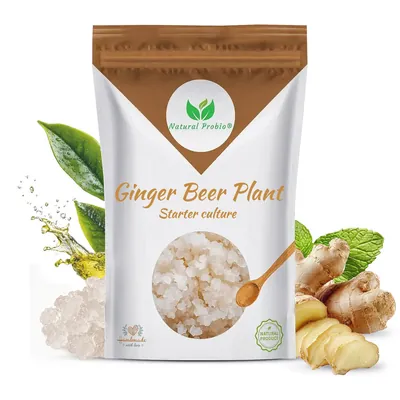 Ginger beer
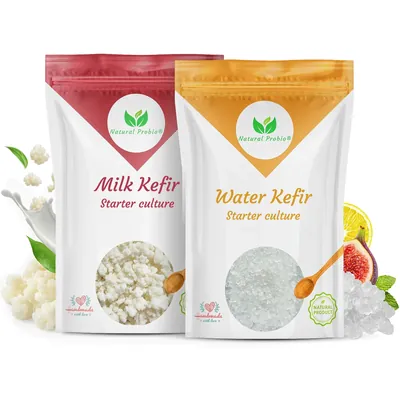 Kefir duo
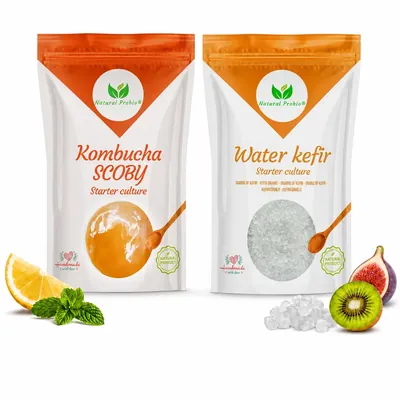 Kefir and kombucha
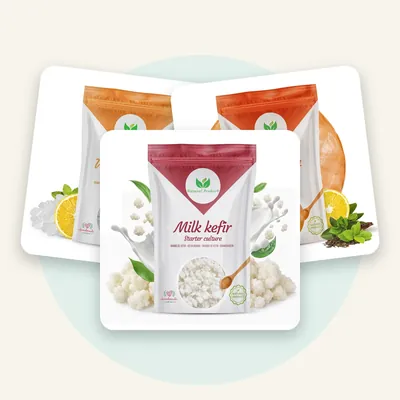 Starter kit
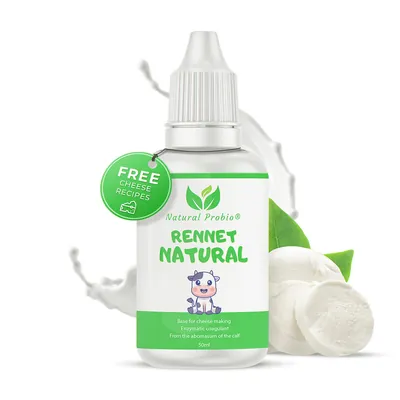 Rennet
Put 20 g of ginger beer plant into 1 litre of water with 60 g of sugar, 2 slices of fresh ginger and 1 dried fig. Cover with a tea towel and leave it for 24 to 48 hours at room temperature. Strain, pour the drink into a swing-top bottle, close it and leave it for another 48 hours to build the fizz. Then into the fridge. The plant goes straight back into fresh sugar water with new ginger.
What is real ginger beer?
Most ginger beer on sale today is a fizzy drink: water, sugar, ginger flavouring and carbon dioxide from a machine. The original was something else. It was brewed in the kitchen, in stone jars and heavy bottles, and its fizz came from fermentation. That is the ginger beer you make with a ginger beer plant.
The taste is quite different from the bottled kind. It is less sweet, with a clean, dry finish and a slight tang from the fermentation. The ginger is fresh and hot rather than sugary, and the bubbles are fine and lively. You choose how much heat it has, how sweet it is and whether it gets lemon, lime or spices.
Like every homemade fermented drink, ginger beer made with a plant contains traces of alcohol, usually under 1%. It is a soft drink, in the old sense: something to pour for the whole table.
The ginger beer plant: what it is
Despite the name, the ginger beer plant is not a plant at all. It is a live culture of yeast and bacteria, bound together in small, translucent, jelly-like grains that clump together at the bottom of the jar. Fed with sugar water and ginger, it turns the sugar into gentle acidity, aroma and gas.
It was a common sight in kitchens in the nineteenth and early twentieth centuries, kept going for years and passed from household to household, until bottled fizzy drinks pushed it out. Today it is enjoying a well-earned revival among people who want ginger beer with real character.
People often confuse it with a "ginger bug", an improvised wild starter. A ginger beer plant is an established culture: it starts working straight away and gives you a consistent result batch after batch, which is exactly what you want when you are bottling. How it looks, what it is made of, how it grows and how it differs from water kefir grains are covered in the guide What is a ginger beer plant?
What you need
| Ingredient or equipment | Quantity | What it is for |
|---|---|---|
| Ginger beer plant | 20 g | The live culture |
| Water | 1 litre | Tap water left to stand, or boiled and cooled |
| Granulated white sugar | 60 g | Food for the culture |
| Fresh ginger | 2 slices (more to taste) | The flavour and the heat |
| Dried fig | 1 | Extra flavour and a little help for the fermentation |
| Glass jar | A little over 1 litre | For the first fermentation |
| Plastic or stainless steel sieve | 1 | To strain the plant |
| Tea towel and elastic band | 1 | Covers the jar |
| Thick swing-top bottle | 1 litre | For the second fermentation and the fizz |
Our ginger beer plant comes in a 20 g portion (£14), enough for 1 litre per batch from the start, with instructions and recipes.
The basic method
1. Sugar water
Dissolve 60 g of sugar in 1 litre of water. If your tap water is chlorinated, let it stand for a few hours first, or boil and cool it.
2. Ginger, fig and plant
Add 2 slices of fresh ginger, 1 dried fig and the 20 g of ginger beer plant. Cover with a tea towel.
3. First fermentation
Leave it for 24 to 48 hours at room temperature. Small bubbles rise and the liquid smells fresh and gingery.
4. Bottle and wait
Strain, pour the drink into a swing-top bottle, close it and leave it 48 hours. Then chill it.
The plant goes straight back into a fresh jar of sugar water with new ginger and a new fig, and the cycle continues. The guide How to make ginger beer goes through every step in detail, including how to judge when the first fermentation is done and how to adjust the timings to your kitchen.
The ginger: how much, which kind
Fresh ginger root is what you want: firm, heavy for its size, with smooth, tight skin. Wrinkled, dried-out ginger gives less flavour and less heat. Two slices per litre gives a gentle, rounded ginger beer; for something with real bite, use four or five, or add grated ginger at bottling.
| Style | Ginger per litre | Result |
|---|---|---|
| Mild, for children and the cautious | 2 thin slices | Soft, warm, refreshing |
| Classic | 3 to 4 slices | Clear ginger flavour, a pleasant warmth |
| Fiery | 4 to 5 slices plus a teaspoon of grated ginger in the bottle | Proper heat at the back of the throat |
Ground ginger is not a good substitute. It clouds the drink, settles at the bottom and gives a dusty, flat flavour. Keep it for your gingerbread.
The second fermentation: getting the fizz right
Straight from the jar, ginger beer is only lightly sparkling. The real fizz comes in the closed bottle. In 48 hours at room temperature, the yeast keeps feeding on the remaining sugar, and the gas dissolves into the drink. Ginger beer can build a lot of pressure, more than water kefir, so a little care goes a long way.
- Use thick glass swing-top bottles made for fizzy drinks, never thin decorative bottles.
- Leave two or three fingers of space at the top.
- In a warm kitchen, open the bottle over the sink after 24 hours to check the pressure, then close it again.
- Once it is fizzy enough, put it in the fridge. The cold slows the yeast right down.
- Open chilled bottles slowly, holding the cap, over the sink the first few times.
A squeeze of lemon or lime juice at bottling sharpens the flavour; a spoon of sugar or honey in the bottle gives more fizz and a sweeter finish.
Recipes and serving ideas
Once you have the basic ginger beer, it becomes the base for a whole range of drinks.
| Drink | What you add | Recipe |
|---|---|---|
| Lemon ginger ale | Lemon juice and zest, a lighter ginger | Lemon ginger ale |
| Alcohol-free Moscow mule | Lime, mint, crushed ice | Alcohol-free Moscow mule |
| Winter spiced ginger beer | A cinnamon stick, two cloves, a strip of orange zest in the bottle | Your own variation |
| Summer ginger and rhubarb | A few pieces of rhubarb in the bottle | Your own variation |
The lemon ginger ale is softer and lighter, the one to make if you find classic ginger beer too fiery. The alcohol-free Moscow mule, with lime and mint over crushed ice, is what you pour for the drivers and the non-drinkers at a party, and nobody will feel left out. At Christmas, a spiced version with cinnamon and orange sits nicely beside the cake; on Halloween night, a jug of fiery ginger beer goes well with a tray of toffee apples. For more ways to make your own fizzy drinks, see Homemade fermented lemonade.
Caring for the plant and taking a break
A ginger beer plant is easy to look after. It wants fresh sugar water every batch, no extreme heat, and no metal that can rust. As it works, it grows: after a few weeks you will have noticeably more than 20 g.
- Each batch: strain after 24 to 48 hours and start again with fresh sugar water, ginger and a fig.
- A week off: put the plant in fresh sugar water in a closed jar in the fridge.
- Coming back: one or two ordinary batches and it is back to full speed. The first one may be a little slow.
- Too much plant: make 2 litres at a time, keeping roughly 20 g per litre, or give a spoonful to someone who would like to start.
The plant does not need rinsing in normal use. If you ever do, use cool, unchlorinated water. Old ginger slices and the fig are thrown away at each batch.
In winter, a cool British kitchen slows everything down, and the first fermentation may need the full 48 hours or a little more. A warm shelf in or near the airing cupboard helps. More on fermenting through the cold months in Fermenting in winter.
When something is not right
| What you notice | Usually because | What helps |
|---|---|---|
| Little or no fizz | A cold kitchen, too short in the bottle, a loose seal | A warmer spot, another day in the bottle, a better bottle |
| Very sweet | Fermentation too short or too cool | A few more hours in the jar |
| Very dry or sour | Too long or too warm | Strain earlier, add a spoon of sugar at bottling |
| Not much ginger flavour | Too little ginger, old ginger | More slices, fresh firm root, grated ginger in the bottle |
| Bottle gushes when opened | Too warm, too long, too much sugar | Chill sooner, open over the sink, check after 24 hours |
| Plant not growing | Very soft water, too little sugar | Keep to 60 g per litre, try a still mineral water |
The guide How to make ginger beer has a full troubleshooting section. If something looks really wrong, such as fuzzy mould on the surface or a bad smell, write to us with a photo and we will help you personally.
Ginger beer or water kefir?
The two are close relatives. Both are fizzy, dairy-free, made from sugar water with a live culture, and both are ready in a day or two. The difference is in the character. Ginger beer is spicy, dry and strongly fizzy, with the ginger front and centre. Water kefir is softer and fruitier, a blank canvas for whatever fruit you add.
The water kefir routine is daily, with the same 24-hour rhythm; ginger beer can run a little more loosely, from 24 to 48 hours. Some people keep both and alternate. The side-by-side comparison is in Ginger beer or water kefir?, and if you are still choosing between all the cultures, Which ferment suits me? and Fermented drinks for beginners will help.
Buying a ginger beer plant
You will find ginger beer by the bottle in every shop, but not the live culture to make your own. Our ginger beer plant is sent alive, in a 20 g portion, with instructions and recipes. Our cultures come from traditional methods: unique and vigorous.
Pay by Visa or Mastercard debit or credit card, Apple Pay, Google Pay, PayPal or Klarna (pay in 3). Standard tracked delivery costs £4.90 and is free from £35 (3 to 6 working days across the UK), and express tracked delivery costs £14.90 (3 to 5 working days, Royal Mail on the last leg). All prices include VAT. Orders leave within 24 to 48 working hours. All the details are on Delivery and payment. Adding water kefir grains or a kombucha SCOBY to the same order is an easy way to reach £35, so standard delivery costs nothing, and have two fizzy drinks on the go.
The plant travels in a sealed pouch in its own liquid. When the parcel arrives, open it and start your first jar of sugar water the same day if you can. If not, keep the pouch in the fridge: it will wait two to three days without complaint. The first batch may be a little slow while the plant settles into your water and your kitchen, and from the second or third it finds its full rhythm.