
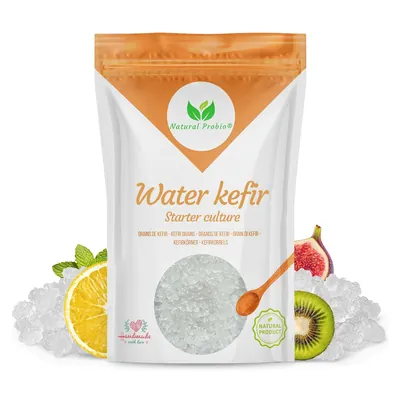
 Water kefir
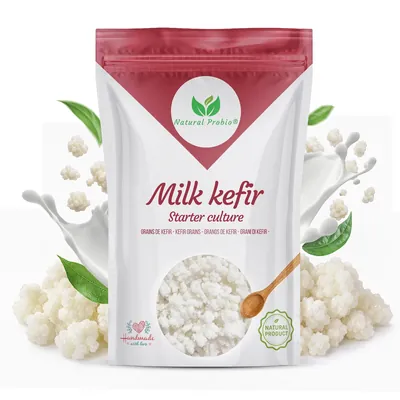 Milk kefir
 Kombucha
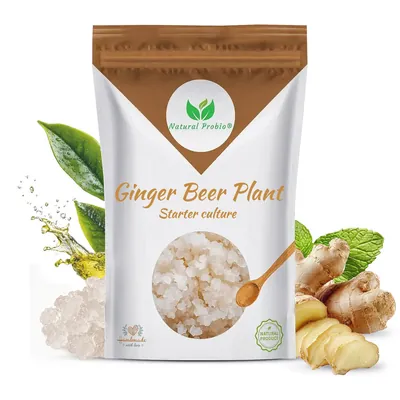 Ginger beer
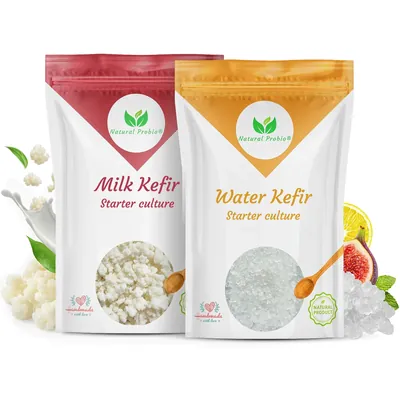 Kefir duo
 Kefir and kombucha
 Starter kit
 Rennet
The easiest place to start is water kefir: 30 g of grains, 1 litre of water, 4 tablespoons of sugar (about 60 g), a dried fig and a slice of lemon, and you strain it after 24 hours. Milk kefir is just as quick if you like something creamy. Kombucha takes 7 to 10 days but asks very little of you along the way, and ginger beer sits in between, spicy and very fizzy within about four days. A jar, a sieve, a tea towel and a swing-top bottle are all the kit you need.
What is a homemade fermented drink?
It is a drink that yeasts and lactic acid bacteria make for you. You give them sugar water, milk or sweet tea, and they turn it into sourness, aroma and bubbles. Your part is to mix the liquid, wait and strain.
Those yeasts and bacteria live together in a form you can see and handle: clear little crystals for water kefir, soft white florets like tiny cauliflowers for milk kefir, a pale rubbery disc for kombucha, and small cloudy granules for the ginger beer plant. We call it a live culture because it feeds, grows and carries on from one batch to the next. You buy it once and then you keep it going.
The taste has very little in common with the fizzy drinks in the shop. A fermented drink is less sweet and livelier, with a tang that changes depending on how long you let it work. That is the fun of it: you decide where it lands between soft and sharp.
The four classics at a glance
| Drink | Base | Time | Taste |
|---|---|---|---|
| Water kefir | Water, sugar, dried fig, lemon | 24 hours, then 24 to 48 hours in the bottle | Light, fruity, a bit like a homemade lemonade |
| Milk kefir | Whole milk | 24 hours | Fresh and tangy, like a pouring yoghurt |
| Kombucha | Sweetened black or green tea | 7 to 10 days, then 2 to 5 days in the bottle | Drier, closer to a crisp cider |
| Ginger beer | Water, sugar, fresh ginger, dried fig | 24 to 48 hours, then 48 hours in the bottle | Spicy, punchy and very fizzy |
All four are made at room temperature on the kitchen worktop, with no machine to plug in. None of them needs anything sterilised: a jar washed in hot water and rinsed well does the job.
Which one should you start with?
Start with what you actually like to drink, not with whatever is in fashion. The drink you enjoy is the one you will still be making in three months.
- You reach for fizzy drinks, squash or lemonade: water kefir. It is the most forgiving culture of the lot, and you see a result the next day. The full method is in How to make water kefir.
- You have yoghurt with your breakfast: milk kefir. Same 24-hour rhythm, with 20 g of grains in 1 litre of whole milk, and a fine stand-in for buttermilk in scones.
- You like cider, iced tea and drier flavours: kombucha. One batch a week and a quarter of an hour to set it up. If you drink a strong cup of tea several times a day, you already have the main ingredient in the cupboard. A proper brew of ordinary black tea is all a SCOBY asks for: see The best tea for kombucha.
- You like a drink with a bite: ginger beer, the sharpest of the four and perfect in an alcohol-free Moscow mule. The method is in How to make ginger beer.
Torn between two? The comparisons in Kefir or kombucha?, Water kefir or milk kefir? and Ginger beer or water kefir? set out the differences in taste, timing and effort, and Which ferment is for you? points you in the right direction in two questions.
The kit: you probably have most of it
There is no need to spend money before you know you like it. Here is the list, with the bits that really matter.
| Item | What to look out for |
|---|---|
| A glass jar of a bit more than 1 litre | A wide neck, so you can get the grains or the SCOBY out easily |
| A sieve | Plastic or stainless steel, never metal that rusts |
| A clean tea towel and an elastic band | To cover the jar without sealing it during the first fermentation |
| A swing-top bottle | Thick glass made for fizzy drinks |
| A spoon and a funnel | Plastic, wood or stainless steel |
The rules that head off most problems
First batches that go wrong nearly always go wrong for the same reasons. Keep these five points in mind and you are well ahead.
1. Stick to the quantities
The basic measures are worked out so the culture has enough to eat without being swamped. Double everything if you double the grains, but do not change the proportions on a whim.
2. Aim for 20 to 25°C
Below that, everything slows down. Above it, the drink turns sour fast. A fixed spot, away from the cooker and out of direct sun on the windowsill, makes all the difference.
3. Use real sugar
White sugar or cane sugar. Sweeteners and stevia give the culture nothing to feed on, and it goes hungry.
4. Cover, do not seal
During the first fermentation a tea towel is enough. You only close things tightly for the second fermentation, in the bottle.
5. Taste rather than watch the clock
The times are a guide. Your tongue tells you when to strain: still sweet, give it longer; already sharp, strain a little earlier next time.
The slips people make most often with kefir, from heavily chlorinated water to the bottle filled to the brim, are all in Beginner kefir mistakes.
What a week of fermenting looks like
The hardest part is getting into the habit. Once it sticks, it takes less time than making a pot of tea.
Water kefir runs on a daily rhythm. In the morning you strain yesterday's jar, put the grains back into fresh sugar water with the fig and the lemon, and bottle the strained kefir with a few strawberries or a splash of juice. By the following evening it is fizzy and chilling in the fridge. Milk kefir follows the same daily pattern, often set up after dinner for a cold glass at breakfast or a splash over the porridge. Ginger beer runs at a slightly slower beat: a jar every two days or so, then 48 hours in the bottle, which suits anyone who wants a few bottles ready for the weekend.
Kombucha works by the week. On Sunday you bottle the last batch and brew a pot of sweet tea for the SCOBY. By Wednesday the bottles go into the fridge, ready for the weekend. Plenty of people end up with two jars side by side: kefir for every day, kombucha for Saturday.
Bubbles, pressure and traces of alcohol
Most of the fizz forms during the second fermentation, in the closed bottle, and that is where you need to pay a bit of attention. Leave a few centimetres of air under the stopper, and in warm weather open the bottle once over the sink after 24 hours to check the pressure. After that, the fridge calms everything down.
Like any homemade fermented drink, these contain traces of alcohol, usually under 1%. A short second fermentation and a quick move to the fridge keep it low. The details are in How much alcohol is in kombucha?
Frequently asked questions
What is the easiest fermented drink for a beginner?
Do I need special equipment?
Can I run more than one culture at a time?
How long does a culture last?
What do I do with my culture when I go on holiday?
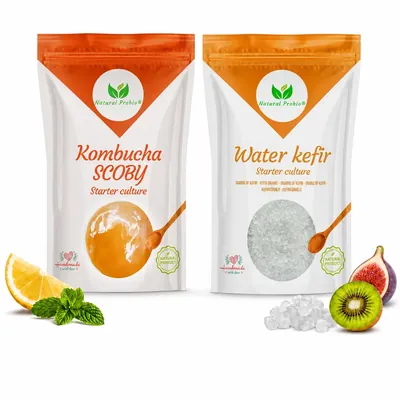
Fancy trying more than one at once? The sets bring several cultures together in one parcel: the fermentation starter kit (water kefir, milk kefir and kombucha) saves you £7, the kefir duo £4 and the water kefir and kombucha set £4. Standard tracked delivery in the UK is £4.90, free from £35, and all prices include VAT. For a single first step, our live water kefir grains start at £11.