
 Water kefir
 Milk kefir
 Kombucha
 Ginger beer
 Kefir duo
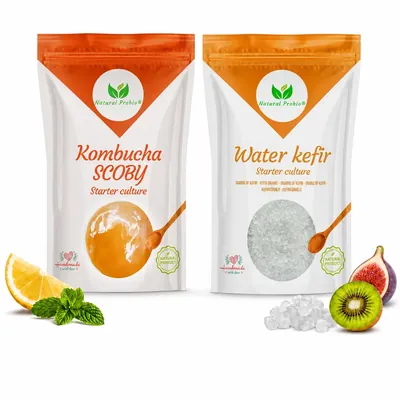 Kefir and kombucha
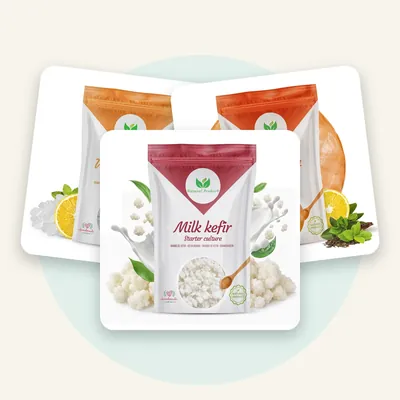 Starter kit
 Rennet
Berries may be the prettiest thing you can add to kombucha. They bring flavour and colour: after a few hours in the bottle the kombucha is pink, after a day deep red. The acidity of the fruit sits well with the tartness of the kombucha, and the fruit sugars give a lively fizz. Late August and September are the months for it: the hedgerows are heavy with blackberries, and an hour's walk fills a tub. Out of season, a bag of frozen summer fruit works just as well.
Ingredients
- 1 litre kombucha from the first fermentation
- 120 g berries, such as blackberries, raspberries or strawberries
- 1 teaspoon sugar (optional)
Method
- Lift the SCOBY out of your kombucha and keep it with 250 ml of kombucha for the next batch.
- Rinse the berries, remove any stalks and leaves and cut large strawberries in pieces. Crush the fruit lightly with a fork.
- Put the fruit and the sugar, if using, into a clean 1 litre swing-top bottle. A wide funnel makes this easier.
- Fill the bottle with kombucha to about 3 cm below the rim and close it.
- Leave it at room temperature, out of direct sun, for 2 to 5 days.
- Chill the bottle for a few hours, then pour the kombucha through a fine sieve.
Which berries?
Every berry works, and each tastes different. Blackberries make the kombucha almost purple, with a deep, slightly wild flavour. Raspberries give the most fragrance and a sweet, perfumed taste. Strawberries are soft and sweet with a lighter colour. Redcurrants are sharper and fresher; add the teaspoon of sugar with those. Stoned cherries work well too.
When picking blackberries, choose the plump, shiny, fully black ones that come away easily, and leave the red ones for the next walk. Pick above dog height and away from busy roads. Old English folklore says not to pick them after Michaelmas, when the devil is said to spit on them, and in truth the late fruit is usually watery anyway.
Frozen fruit is perfect outside the season. Let it thaw in a bowl and add the juice to the bottle. Freezing has already opened the cells, so the fruit gives up its colour and flavour even faster than fresh.
The base
You start with ordinary kombucha: 1 SCOBY with 1 cup of starter liquid (about 250 ml), 80 g sugar, 3 tea bags (about 8 g loose tea) and 1 litre water, left for 7 to 10 days at 20 to 25°C. Taste it with a straw slipped down the side of the jar: it should still be faintly sweet and already clearly tart. The full method is in How to make kombucha, and the choice of tea in the best tea for kombucha. If you already drink a strong breakfast tea several times a day, the main ingredient is sitting in your tea caddy.
Variations
- Blackberry and apple: 80 g blackberries and 100 ml cloudy apple juice. A taste of autumn, close to the apple and cinnamon kombucha.
- Raspberry and ginger: 100 g raspberries with 10 g grated ginger, halfway to the ginger and lemon kombucha.
- Strawberry and basil: strawberries with two basil leaves. Fresh and a little unexpected.
- Blackcurrant: 80 g blackcurrants with the teaspoon of sugar. Dark, intense and very fruity.
- Blackberry and bay: one bay leaf with the blackberries gives a subtle, almost spicy note.
Serving and storing
Pour it cold into a wine glass, perhaps with a few fresh berries. It is a good alcohol-free drink for the table at a dinner, and it looks the part. Keep the opened bottle in the fridge and drink it within a week or so. More about timing and fizz is in the guide to the kombucha second fermentation.
Frequently asked questions
Can I put the fruit in with the SCOBY?
My kombucha is very fizzy and sprays. What now?
Is there alcohol in it?
To start, all you need is a live kombucha SCOBY with its starter liquid. More recipes and guides are on the kombucha page.