
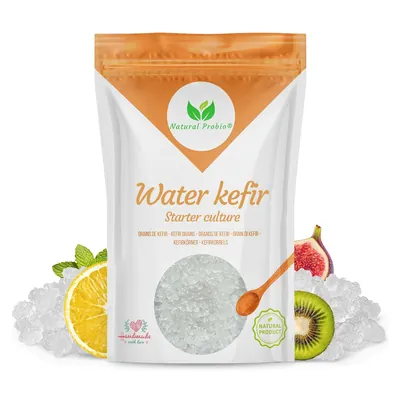
 Water kefir
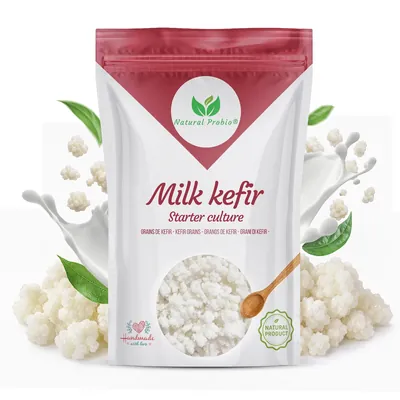 Milk kefir
 Kombucha
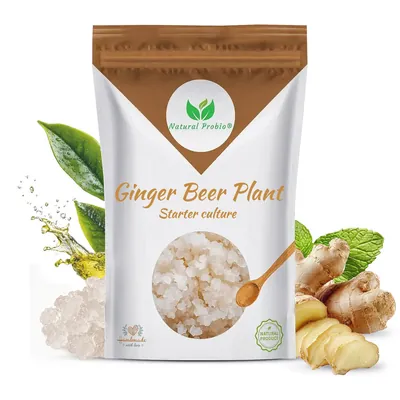 Ginger beer
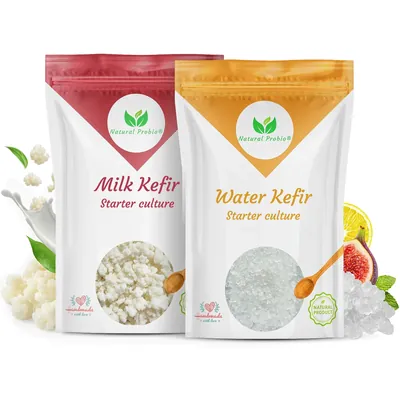 Kefir duo
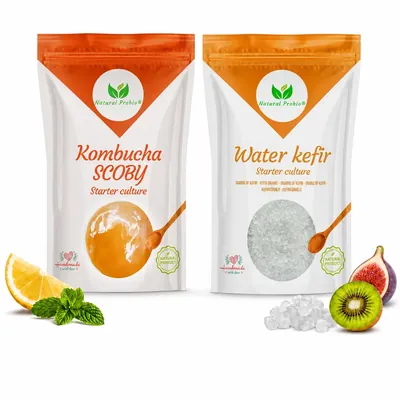 Kefir and kombucha
 Rennet
Water kefir is a fruity, lightly fizzy drink made from sugar water, ready in 24 hours. Milk kefir is a fresh, drinkable fermented milk made from whole milk, also ready in 24 hours, a bit like buttermilk with a sparkle. Kombucha is fermented sweet tea, sharp and dry, and needs 7 to 10 days. Kefir asks for a daily rhythm, kombucha a weekly one. For breakfast and baking, choose milk kefir. For a refreshing drink, choose water kefir or kombucha. Cannot decide? Plenty of people keep two or all three.
Three cultures, three drinks
When someone says "kefir", they can mean two different things. Water kefir is made with water kefir grains (also called sugary kefir grains, tibicos or Japanese water crystals) in water with sugar, a dried fig and a slice of lemon. Milk kefir is made with milk kefir grains, small white florets that look like cauliflower, in whole milk. They are two separate cultures and you cannot swap one for the other.
Kombucha is something else again. There are no grains at work here, but a SCOBY: a flat, rubbery disc of bacteria and yeasts that floats on sweetened tea. Kombucha takes longer and tastes of the tea you make it with.
What they have in common: all three are live cultures you use again and again, all three turn sugar or milk sugar into sourness, aroma and a little fizz, and all three taste the way you want them to, depending on how long you leave them. Like every homemade fermented drink, they contain traces of alcohol, usually under 1%.
The overview
| Water kefir | Milk kefir | Kombucha | |
|---|---|---|---|
| Base | Water, sugar, fig, lemon | Whole milk | Tea, sugar |
| Culture | 30 g grains per litre | 20 g grains per litre | 1 SCOBY with a cup (about 250 ml) of starter liquid |
| First fermentation | 24 hours | 24 hours | 7 to 10 days |
| Second fermentation | 24 to 48 hours in the bottle, with fruit | Optional, a few hours with zest or fruit | 2 to 5 days in the bottle |
| Taste | Fruity, mild, lightly tart | Fresh, creamy, sour, a little prickle | Sharp, dry, with tea notes |
| Texture | Clear, sparkling | Like thin yoghurt or buttermilk | Clear, sparkling |
| Rhythm | Every day or every other day | Every day | Once a week |
| Caffeine | No | No | Some of the caffeine from the tea |
| Dairy | No | Yes | No |
Taste: which one is for you?
Water kefir is the lightest of the three. After a day in the jar it tastes lightly sweet and fresh, with a tart edge. It gets its real character in the bottle: rhubarb from the garden in spring, elderflower from the hedgerow in June, strawberries in summer, lemon and ginger all year round. If you like homemade lemonade but with less sugar, this is the one. The method is in How to make water kefir.
Milk kefir is really a dairy product. Fresh and sour, a little thicker than buttermilk, with a light prickle on the tongue. It is at its best at breakfast, over porridge, in a banana smoothie or in overnight oats. Drain it and you have a soft, spreadable cheese. And in scones or pancakes it takes the place of buttermilk in the same quantity. The method is in How to make milk kefir.
Kombucha is the grown-up thirst-quencher. Drier and sharper than water kefir, with the depth of the tea underneath. Made with black tea it is reminiscent of a dry cider, with green tea more like a tart lemonade. Served in a wine glass with ice, it makes a lovely alcohol-free aperitif. And if there is always a box of strong breakfast tea by the kettle, you already have half the ingredients for a proper brew. The method is in How to make kombucha.
Time and effort
This is where the biggest difference lies. Kefir runs on a daily rhythm. Every day, or every other day, you strain the grains, set them going again and have a litre ready. It takes a couple of minutes, but it does have to happen. Kefir suits people who can fit it into a morning routine, like putting the kettle on.
Kombucha runs on a weekly rhythm. Once a week you make tea, pour off the finished kombucha and start a new batch. In between there is nothing to do. That is handy if your weekdays are busy. The downside: you wait a week for your first glass, and a batch that goes wrong also costs you a week.
| Your situation | Best fit |
|---|---|
| You are home every morning and like a fixed routine | Water kefir or milk kefir |
| You are out a lot and want one job a week | Kombucha |
| You are often away for the weekend | Kombucha, or kefir with a break in the fridge |
| You want to see results quickly | Water kefir: your first glass tomorrow |
| You bake a lot, especially scones and pancakes | Milk kefir |
In the kitchen
All three are more than a drink. Milk kefir is the most versatile in the kitchen: in dressings, dips, batters and cakes, or drained into a fresh cheese. A kefir apple cake made with Bramleys comes out soft and moist. Water kefir is the base for summer drinks and ice lollies, such as the water kefir ice lollies. Kombucha left to run on turns into a mild vinegar for salads and quick pickles, as in the kombucha vinaigrette.
What it costs
With all three you buy the culture once. After that, all you pay for per litre is a little sugar, a fig and a lemon, some tea, or the milk. Kefir grains multiply, and a SCOBY grows a new layer with every batch. Compared with a bottle of kefir or kombucha from the Tesco or Sainsbury's chiller cabinet, the saving adds up quickly, especially if you drink a glass a day. A worked example is in The cost of making kefir at home.
Why not both?
Lots of people keep kefir and kombucha going side by side. It works well because the rhythms complement each other: a glass of water kefir or milk kefir every day, and at the end of the week a bottle of kombucha with fruit. Keep the jars a little apart, so the cultures do not influence each other, and use a separate sieve and cloth for each.
That is exactly what the sets are for. The kefir and kombucha set combines water kefir grains with a kombucha SCOBY. If you want to try all three, the complete fermentation starter kit has water kefir, milk kefir and kombucha. All the combinations are on the sets page.
And what about ginger beer?
There is a fourth contender: real ginger beer, made with a ginger beer plant. Like water kefir it works with small grains in sugar water, but with fresh ginger. The result is hotter and drier than water kefir, with a strong, fine fizz, and less sour than kombucha. It needs 24 to 48 hours in the jar and 48 hours in a closed bottle. If you love the bite of fresh ginger, read Ginger beer or water kefir?
Frequently asked questions
Which is easier for a beginner, kefir or kombucha?
Can I keep kefir and kombucha in the same room?
Can I make kombucha with ordinary breakfast tea?
Can I drink kombucha in the evening?
Still not sure? Our ferment finder gives you an answer in two questions. Or start straight away with water kefir grains from £11, milk kefir grains from £14 or the kombucha SCOBY at £16. Delivery across the UK is free from £35, and all prices include VAT. The difference between the two kinds of kefir is in Water kefir or milk kefir?
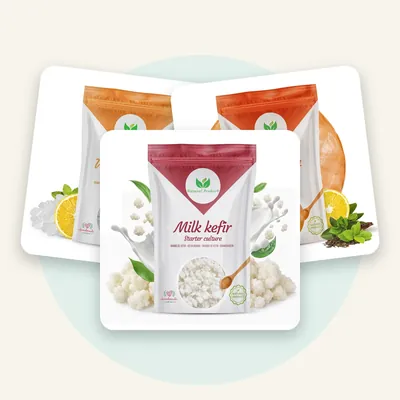
Complete fermentation starter kit
Water kefir 30 g + Milk kefir 20 g + Kombucha. All three cultures, at the best price.
You save £7 compared with buying separately
£40
incl. VAT, plus delivery (free from £35)