
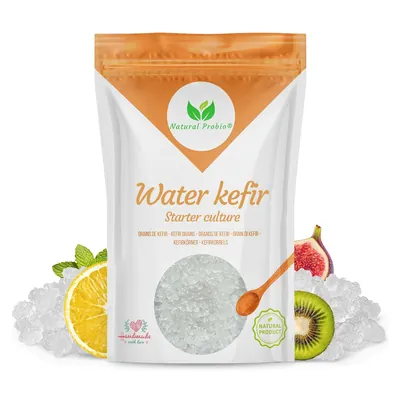
 Water kefir
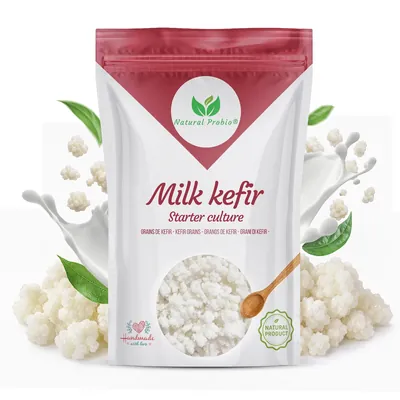 Milk kefir
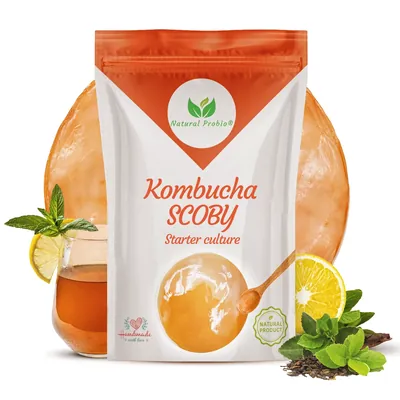 Kombucha
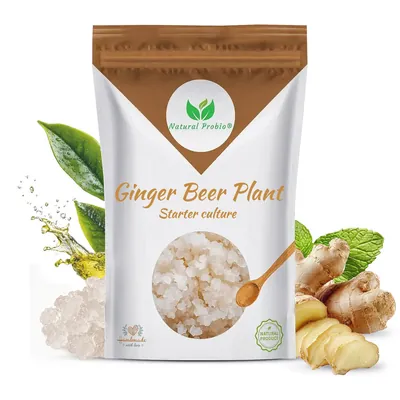 Ginger beer
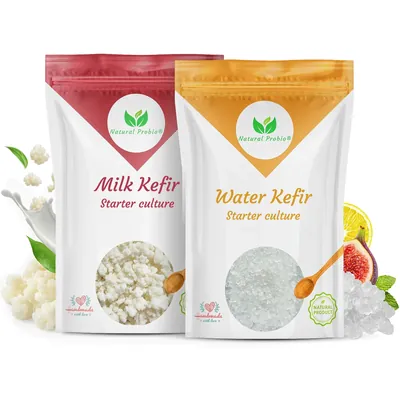 Kefir duo
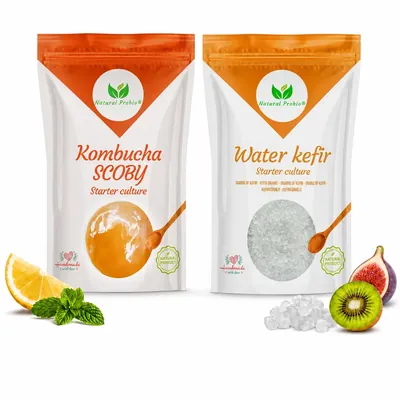 Kefir and kombucha
 Starter kit
 Rennet
A ginger beer plant is a community of yeasts and bacteria living in small, translucent, jelly-like grains. In water with sugar, fresh ginger and a dried fig, it turns the sugar into gentle acidity, aroma and fizz. 20 g is enough for 1 litre, a batch takes 24 to 48 hours, then another 48 hours in a closed bottle. Fed regularly, the culture grows from batch to batch and can last for years.
A misleading name
Say "plant" and people think of leaves and roots. The ginger beer plant has neither. It got its name in Victorian Britain, when homemade ginger beer was an everyday drink in a great many kitchens. People watched the grains in the jar swell and multiply and treated them like something growing, which they are. Just not a plant.
The "beer" part is just as loose. At the time, beer was a catch-all word for any home-brewed drink, from nettle beer to spruce beer. What ends up in your glass is a spicy, fizzy ginger drink with only traces of alcohol, usually under 1%. Much closer to a fizzy drink than to a pint. The grains were kept going for years and passed from house to house, until bottled fizzy drinks took over the shelves in the twentieth century.
What it looks and feels like
The grains are white to pale cream, translucent and soft. Many people's first thought is cooked rice, or little pieces of gelatine. Between your fingers they feel smooth and slightly slippery. They are smaller and finer than water kefir grains, and less angular, and they tend to clump together at the bottom of the jar.
In an active jar they are surrounded by tiny bubbles, and every so often a grain is carried up by the gas and then sinks again. Strained and on their own, the grains smell of very little. The aroma develops in the drink: ginger, fresh yeast, a hint of apple cider.
Our cultures come from traditional methods: unique and vigorous. The ginger beer plant arrives in a well-sealed pouch, ready for its first batch.
What is inside a grain
Each grain is a small, organised community. The yeasts break down the sugar and turn it into carbon dioxide and a trace of alcohol. The bacteria turn part of that into mild acids. The bacteria also build the jelly-like structure that holds everyone together. That is why the culture does not simply spread out through the water: it stays in its grains, and you can strain them, start again and use them over and over.
That partnership is what gives ginger beer its character: less sweet than a shop-bought fizzy drink, nowhere near as sharp as vinegar, with a sparkle that builds by itself in the bottle. How to turn it into your own drink, step by step, is in How to make ginger beer.
What it likes, and what it does not
Its food is sugar. With 60 g per litre, it has 24 to 48 hours of work ahead of it. The dried fig adds a little extra food and flavour that white sugar alone does not have. The ginger brings heat and aroma.
| It likes | It does not like |
|---|---|
| Tap water left to stand, or boiled and cooled | Water that smells strongly of chlorine |
| 20 to 25°C and a calm spot | Heat, direct sun, a place on the radiator |
| White sugar or golden cane sugar | Sweeteners with no real sugar in them |
| A steady rhythm | Weeks at room temperature with no fresh food |
| Glass, food-grade plastic, stainless steel | Other metals that can rust or react |
| Fresh ginger root | Essential oils and strong flavourings in the jar |
The first batches: getting off to a good start
When your ginger beer plant arrives, it has spent a few days travelling and needs to settle into its new home. Give it a little time:
- Start it straight away. Put the grains into sugar water with ginger and a fig on the day they arrive.
- Do not judge too fast. The first batch often has little fizz. That is normal. From the second or third batch, the culture shows what it can do.
- Keep things steady. Same spot, same quantities, same water. The less changes, the faster it finds its rhythm.
- Drink the first litre anyway. Even if it is sweeter and quieter, it already tastes of ginger. With sparkling water and a wedge of lime, it is perfectly good.
After a week you will have the hang of it: strain, bottle and start again every day or two.
How it grows
With every batch a few new grains appear. At first you barely notice, because in the early rounds the culture is still getting used to your water and your kitchen. After that it picks up, and one day you realise you have twice what you started with.
You then have two options. Make 2 litres at a time in the same proportions: 40 g of grains, 120 g of sugar, four slices of ginger and two figs. Or keep some aside as a spare. For a short break, the grains go into fresh sugar water in a closed jar in the fridge, and they need one or two batches to get back up to speed afterwards. And if someone you know fancies making their own ginger beer, a spoonful of your own surplus is a lovely thing to give.
Years of ginger beer
A ginger beer plant that gets fresh sugar water regularly can, in principle, keep going indefinitely. Always use a clean jar, replace the ginger and the fig every time, and keep it out of the sun. If, after a long while, some grains look grey or mushy, pick out the firmest, best-looking ones and carry on with those. The rest can go in the compost. In a cold British winter, with the heating off overnight, it slows down rather than stopping: a shelf in the airing cupboard, away from the hot water tank, usually sorts it out.
Ginger beer plant, ginger bug and water kefir
Three things that are often mixed up. Side by side:
| Ginger beer plant | Ginger bug | Water kefir | |
|---|---|---|---|
| What it is | An established culture in grains | A starter of ginger, sugar and water left to ferment on its own | An established culture in grains |
| Reusable | Yes, strain and start again | Kept going by feeding, no grains | Yes, strain and start again |
| Taste | Sharp, dry, spicy | Varies from batch to batch | Fruity and light |
| Result | Consistent from batch to batch | More ups and downs | Consistent from batch to batch |
A ginger bug starts from whatever happens to live on the ginger and in your kitchen, so every one is a little different. With a ginger beer plant you know what you are getting, which matters when you are filling bottles. The difference from water kefir is covered in detail in Ginger beer or water kefir?
Frequently asked questions
Can I keep the ginger beer plant in the fridge?
Can I use the grains to make water kefir?
How do I know my grains are active?
Do the grains get bigger or more numerous?
Is a ginger beer plant alcoholic?
Fancy starting your own? Our ginger beer plant comes as 20 g of live grains for £14, with instructions and recipes. Everything about ginger beer, from the first jar to an alcohol-free Moscow mule, is on the ginger beer page.