
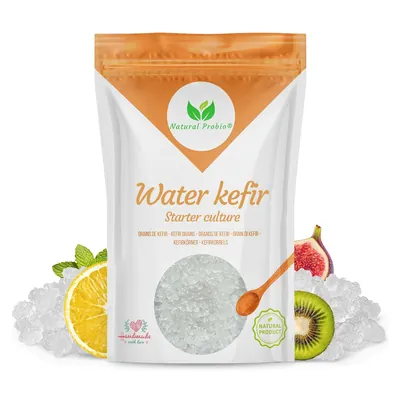
 Water kefir
 Milk kefir
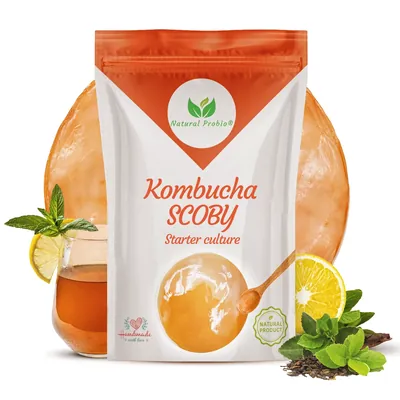 Kombucha
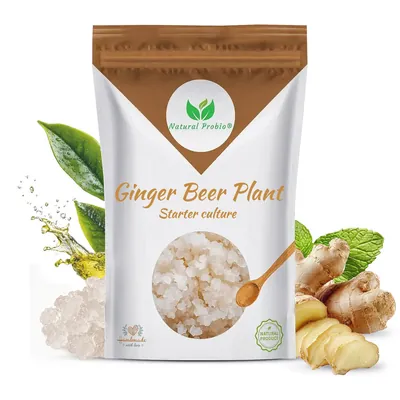 Ginger beer
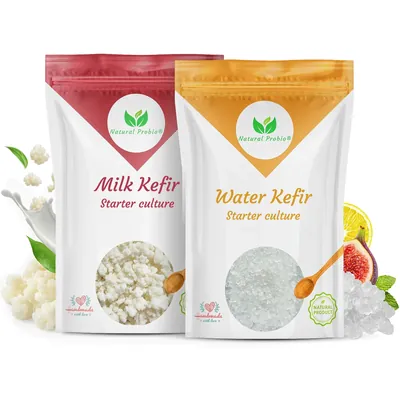 Kefir duo
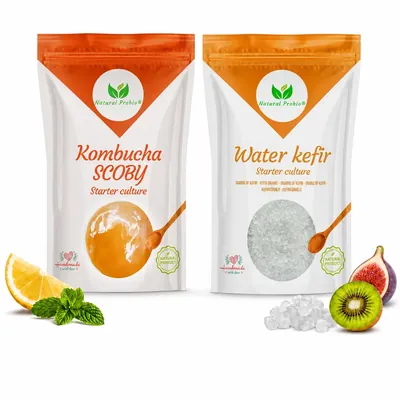 Kefir and kombucha
 Starter kit
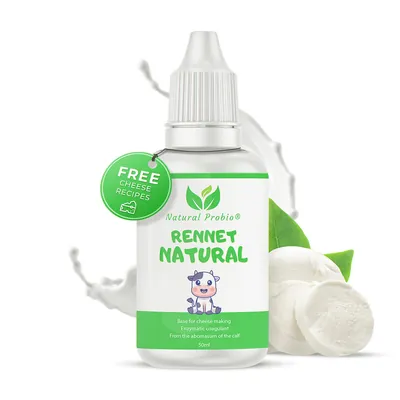 Rennet
The easiest fermented lemonade is made with water kefir: 30 g of grains, 1 litre of water, 4 tablespoons of sugar (about 60 g), a dried fig and a slice of lemon, 24 hours on the worktop. Then pour the drink into a swing-top bottle with fruit and leave it closed for 24 to 48 hours. That is where the real fizz comes from. A ginger beer plant gives you a spicy ginger lemonade, and kombucha a sharper, tangier version.
What is fermented lemonade?
Lemonade where a live culture makes the bubbles itself. No gas canister, no syrup, but real fizz, the kind that hisses when you lift the cap.
You start with a base: sugar water that has spent a day with water kefir grains, or water with ginger and a ginger beer plant, or kombucha made from sweet tea. The culture eats most of the sugar. What is left is less sweet than shop lemonade, and fresh and tangy. Then comes the fun part: you put fruit in a closed bottle, and the yeasts turn the sugar in that fruit into new fizz. Two days later you open the swing-top and the sound tells you it worked.
Plenty of grandparents remember a bottle of homemade ginger beer or lemonade on the table at Sunday lunch, long before the shop fizzy drinks took over. Like every homemade fermented drink, it contains traces of alcohol, usually under 1%. More on that in How much alcohol is in kombucha?
Which culture for lemonade?
| Culture | Base | Ready after | Taste |
|---|---|---|---|
| Water kefir grains | Water, sugar, fig, lemon | 24 hours, plus 24 to 48 hours in the bottle | Light, fruity, neutral enough for any flavour |
| Ginger beer plant | Water, 60 g sugar, ginger, fig | 24 to 48 hours, plus 48 hours in the bottle | Spicy, dry, firm fizz |
| Kombucha SCOBY | Tea, 80 g sugar, starter liquid | 7 to 10 days, plus 2 to 5 days in the bottle | Sharper and tangier, a hint of cider |
For lemonade as you know it, water kefir is the obvious choice: the taste is mild, so the fruit comes through clearly. If you love ginger, go for the ginger beer plant. The difference between the two is explained in Ginger beer or water kefir?
The basic method with water kefir
1. Make the base
Dissolve 4 tablespoons of sugar (about 60 g) in 1 litre of water in a glass jar. Add 30 g of water kefir grains, a dried fig and a slice of lemon. Cover with a tea towel and an elastic band.
2. Wait a day
Leave the jar for 24 hours at 20 to 25°C. When the fig has floated up and it tastes only lightly sweet, the base is ready.
3. Strain and fill the bottle
Strain off the grains and start a new batch with them straight away. Put the fruit in a swing-top bottle and pour the drink over it, leaving a few centimetres of space at the top.
4. Let the fizz build
Close the bottle and leave it at room temperature for 24 to 48 hours. Then into the fridge, and drink it the next day.
The full method with every detail is in How to make water kefir, and everything about the bottle stage in Water kefir second fermentation.
Which flavours for which season?
Use what is in the shops, the garden or the hedgerow. Seasonal fruit tastes best and costs least.
| Season | Flavour | Recipe |
|---|---|---|
| Spring | Garden rhubarb with a little lemon zest | Rhubarb water kefir |
| June | Elderflower from the hedgerows, with lemon | Elderflower water kefir |
| Summer | Strawberries, with mint or basil if you like | Strawberry water kefir |
| September | Hedgerow blackberries and raspberries | Berry kombucha |
| Autumn | Apple and cinnamon, or pear with ginger | Apple and cinnamon kombucha |
| Winter | Lemon and ginger, clementine | Lemon and ginger water kefir |
A real lemonade, the one that tastes of lemons, is the simplest of all: the juice of half an unwaxed lemon and a strip of its zest per litre in the bottle, plus a teaspoon of sugar. Sharp, clean and properly fizzy.
Spicy ginger lemonade with the ginger beer plant
With 20 g of ginger beer plant, 1 litre of water, 60 g of sugar, 2 slices of ginger and a dried fig, you have your base. After 24 to 48 hours you strain it, and the drink goes into a closed bottle for 48 hours. The result is drier and spicier than water kefir, with a firm fizz. Add a good squeeze of lime and some mint for a summer drink, or lemon for a ginger ale like the lemon ginger ale. Everything about this culture is on the ginger beer page.
Why is my lemonade not fizzy?
- The bottle is not sealing: a swing-top with a tired rubber ring lets the gas escape. Replace the ring.
- Too little sugar in the bottle: fruit feeds the yeast. Without fruit or a little juice, the fizz stays weak.
- Too cold: below 20°C everything takes longer. Give the bottle an extra day, or find a warmer shelf.
- A young culture: the first batches are often weaker. After three or four batches it picks up.
Other problems are covered in Water kefir problems.
Getting started
With live water kefir grains from £11 you can make a litre of lemonade base every day. If you would like ginger beer too, the ginger beer plant is £14. And for anyone who wants all the fizzy drinks in the house, the water kefir and kombucha set costs £4 less than buying the two separately. Standard tracked delivery in the UK is £4.90 and free from £35: add the ginger beer plant to the set and delivery costs nothing.