
 Water kefir
 Milk kefir
 Kombucha
 Ginger beer
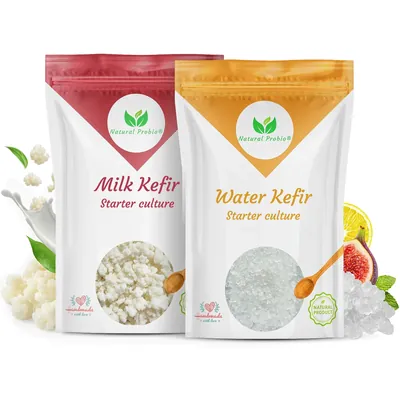 Kefir duo
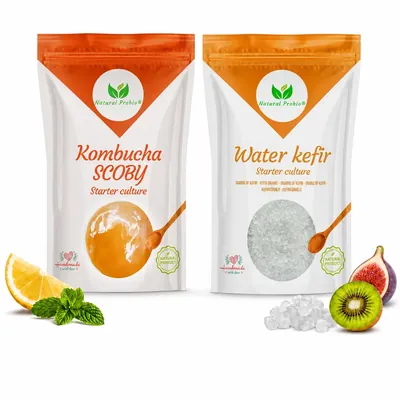 Kefir and kombucha
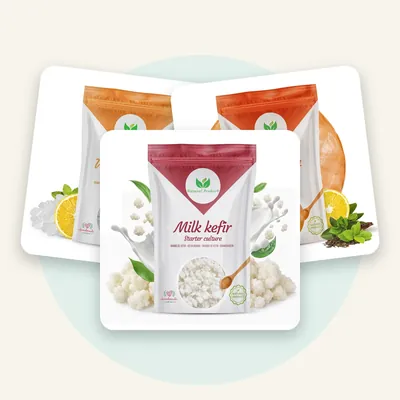 Starter kit
 Rennet
A proper Bramley apple cake is less a cake than a sweet scone dough wrapped around a layer of apples. Every family has its version, most of them written on the back of an envelope, and nearly all of them use buttermilk. Milk kefir does exactly the same job. Its acidity reacts with the bicarb so the crumb rises light and tender, and it keeps the cake moist for days. You do not taste the kefir as such, only a fresh note that suits the sharp Bramleys perfectly.
Ingredients
- 250 g self-raising flour
- half a teaspoon bicarb (bicarbonate of soda)
- a pinch of salt
- 115 g cold butter, plus extra for the tin
- 125 g caster sugar
- 2 eggs
- 150 ml milk kefir
- 2 large Bramley apples (about 450 g)
- half a teaspoon ground cinnamon
- a pinch of ground cloves
- 1 tablespoon demerara sugar
Method
- Heat the oven to 180°C (160°C fan). Butter a 20 cm round cake tin and line the base with baking paper.
- Sift the flour, bicarb and salt into a large bowl. Rub in the cold butter with your fingertips until it looks like breadcrumbs, then stir in the caster sugar.
- Peel and core the apples and cut them into slices about 1 cm thick. Toss them with the cinnamon and cloves.
- Beat the eggs with the kefir and stir them into the flour mixture with a knife until you have a soft, sticky dough. Do not overmix.
- Spread half the dough in the tin, lay the apples on top, then cover with the rest of the dough in spoonfuls. It does not need to cover the apples completely.
- Sprinkle with the demerara sugar and bake for 50 to 60 minutes, until golden and a skewer comes out clean.
- Leave it in the tin for 10 minutes, then turn it out onto a wire rack. Serve warm.
Why Bramleys?
Bramley apples are cooking apples: large, green and properly sour. In the oven they collapse into soft, fluffy pockets that contrast with the firmer dough around them. That is exactly what you want in this kind of apple cake. They are at their best from October, and they keep well in a cool shed or garage through the winter.
No Bramleys? A mix of a firm, tart eating apple and one softer apple works too, though the filling stays more in slices and is a little sweeter. In that case, use 25 g less sugar in the dough.
Kefir instead of buttermilk
Buttermilk is the classic for scones, pancakes and many old family cakes, and milk kefir can stand in for it wherever a recipe asks for it. Use it one for one. Kefir is often a little thicker, so if your dough feels very stiff, add a tablespoon of milk. A kefir that has fermented longer and turned sharper is ideal for baking: the more acid, the better the bicarb works. We look at the two side by side in kefir or buttermilk.
You make your kefir with 20 g milk kefir grains and 1 litre of whole milk, 24 hours at 20 to 25°C. With 10 g you make half a litre. The full method is in How to make milk kefir, and which milk works best is covered in the best milk for kefir.
Variations
- Apple and blackberry: scatter a handful of hedgerow blackberries over the apples in September.
- Apple and sultana: 50 g sultanas soaked in a little warm tea, drained and mixed with the apples. Lovely with a cuppa.
- Apple and rhubarb: in spring, replace one apple with 200 g rhubarb in 2 cm pieces.
- Crunchy top: mix the demerara sugar with a handful of flaked almonds or porridge oats before sprinkling.
Serving and storing
Serve it warm, in thick wedges, with hot custard, softly whipped cream or a scoop of kefir ice cream. Wrapped in baking paper in a tin, it keeps for three days. Warm a slice briefly in the oven before serving and it tastes freshly baked. It also freezes well, in slices, for up to a month.
Frequently asked questions
Can I use plain flour?
My apples sank to the bottom. Why?
Can I use shop-bought kefir?
Live milk kefir grains give you a fresh batch every day, for drinking and for baking. All recipes are on the milk kefir page.