
 Water kefir
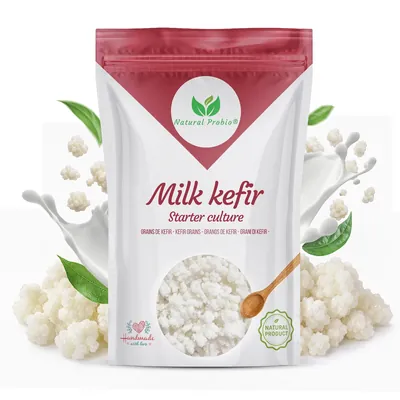 Milk kefir
 Kombucha
 Ginger beer
 Kefir duo
 Kefir and kombucha
 Starter kit
 Rennet
Whole cow's milk is the best everyday base: the grains thrive on it and the kefir comes out creamy. Channel Island (gold top) milk makes it richer still. UHT milk works too, but the kefir is a little thinner. Semi-skimmed is fine now and then; skimmed is best avoided as a habit. Raw milk gives a full-flavoured kefir that changes from batch to batch, goat's milk a lighter, sharper one. Lactose-free milk works and tastes a touch sweeter. Plant drinks cannot keep the grains going on their own.
Why the milk matters so much
Milk kefir grains feed on milk. The bacteria and yeasts living in them use the milk sugar and turn it into a gentle sourness, aroma and a little fizz. The fat and the protein in the milk then decide how thick and creamy the result is. More fat gives a rounder, creamier kefir; more protein gives a firmer set.
The grains also need to grow, and they build their own springy mass from what the milk gives them. On whole milk that happens most easily. The basic method, 20 g of grains to 1 litre of milk, is in How to make milk kefir. This guide is about what goes into the jar with them.
Every milk at a glance
| Milk | The kefir | For every day? |
|---|---|---|
| Whole milk, fresh | Creamy, steady, mildly sour | Yes, the best choice |
| Channel Island (gold top) milk | Very creamy, almost spoonable | Yes, for a richer kefir |
| Whole UHT milk | A little thinner, very even | Yes, as a back-up |
| Semi-skimmed milk | Thinner, fresher | Possible, the grains grow more slowly |
| Skimmed milk | Thin and sharp | Better not as a habit |
| Raw milk from a farm | Full, characterful, different every batch | Yes, if you enjoy the variety |
| Goat's milk | Lighter, whiter, sharper, thinner | Yes, after a gradual switch |
| Sheep's milk | Very creamy, rich flavour | Yes, if you can get it |
| Lactose-free milk | A little sweeter, a little thinner | Possible, with a batch of ordinary milk now and then |
| Plant drinks | Variable, the grains do not grow | No |
Whole milk: the one to keep in the fridge
Ordinary whole milk, the blue top with about 3.5% fat that plenty of British households already buy for the tea, is what milk kefir grains like best. The kefir is creamy, thick enough to eat with a spoon if you leave it a bit longer, and thin enough to drink if you strain it earlier. The grains grow steadily and stay firm.
Fresh pasteurised milk and whole UHT milk both work. You do not need to warm or boil the milk: straight from the carton into the jar. Brand makes very little difference to the grains. What matters is that the milk is whole and fresh, although you may notice small differences in taste between one dairy and another.
Channel Island milk: the gold top
Milk from Jersey and Guernsey cows, sold as Channel Island milk and often with a gold top, carries around 5% fat and a deeper cream colour. Kefir made with it is the richest you will get from cow's milk: almost spoonable after 24 hours, with a buttery, rounded flavour and a pale golden tint. The grains are perfectly happy on it. Because it sets a little faster, check the first batch a couple of hours early. If a whole litre feels too rich for every day, half gold top and half ordinary whole milk is a lovely compromise.
UHT milk
UHT milk has been heated to a very high temperature, which is why it keeps for months in the cupboard. For kefir that is no problem. The grains work in it quite happily, and because every carton is the same, the kefir comes out very consistent. It is a little thinner than kefir made with fresh milk, because the heat changes the way the protein sets, and some people notice a faintly cooked taste.
A carton in the cupboard is handy for the day the fresh milk runs out. One thing to remember: UHT milk does not work for cheese. If you ever want to make a fresh cheese with liquid calf rennet, use fresh milk.
Semi-skimmed and skimmed milk
Semi-skimmed milk (the green top) works, and the kefir tastes fresher and lighter. The grains grow a little more slowly on it, though, and after a few weeks they can start to shrink. If semi-skimmed is what you prefer to drink, give the grains a batch of whole milk once or twice a week to keep them in shape.
We would not recommend skimmed milk (the red top) as your regular choice. The kefir is thin and sharply sour, and the grains get too little to stay in good form.
Raw milk from a farm
If you live near a dairy farm that sells raw milk direct from the farm, kefir made with it is full and creamy, with a more pronounced flavour. It is also less predictable. Raw milk has its own bacteria, and they join in the fermentation, so one batch is thicker, the next sharper, and the kefir tastes different in spring, when the cows go out to grass, than in winter.
- Use raw milk as fresh as possible and keep it cold until it goes into the jar.
- Do not let the cream sit in a layer on top: shake the bottle or stir the milk first.
- If your grains seem unsettled on it, alternate with ordinary whole milk.
Goat's and sheep's milk
Goat's milk, fresh or UHT, is easy to find in most large supermarkets. It gives a lighter, whiter and slightly sharper kefir, with that unmistakable goaty note. It is thinner than cow's milk kefir, because goat's milk protein sets more softly. The grains need a little time to adjust, so it pays to switch gradually over about a week. How to do that is set out in Goat's milk kefir.
Sheep's milk is harder to find, but if you come across it you get a remarkably creamy kefir, almost like a thin yoghurt. The same rule applies: let the grains get used to it slowly.
Lactose-free milk
In lactose-free milk the milk sugar has already been split into simpler sugars. The grains can live on those too, and the kefir tastes a little sweeter and is usually slightly thinner. We make no claims about how much lactose is left in the finished kefir: that depends on the milk, the time and the temperature.
If you mostly use lactose-free milk, give the grains a batch of ordinary whole milk from time to time. It keeps them in form and growing.
Plant drinks
Oat, soya, almond or coconut drinks: you can try a batch with them, but the grains cannot live on them. They stop growing and weaken after a while. If you want to experiment, use part of your grains and put them back into cow's milk afterwards. The whole story is in Kefir with plant milk. For a dairy-free ferment that thrives on its own base, water kefir is the obvious choice.
How to choose your milk
1. Start with whole milk
For the first few weeks, always whole cow's milk. You learn what your kefir should taste like and the grains settle calmly into your kitchen.
2. Notice what is missing
Too thin? A splash of cream, or a few hours more. Too heavy? Try semi-skimmed for part of the batch.
3. Switch gradually
Moving to goat's milk, raw milk or lactose-free milk? Mix half and half for a few days first.
4. Stick with one milk
Once you have found your favourite, keep to it. The grains run best on a steady rhythm with the same milk every day.
A small spare jar of grains in whole milk is useful when you are experimenting with another milk. If anything goes wrong, you always have grains in top form to fall back on. How to keep that spare is explained in Caring for milk kefir grains.
Cold or lukewarm milk?
Either is fine. Milk straight from the fridge only delays the start by a few hours. In a cold British kitchen in January it can help to let the milk come up to room temperature first, or to set the jar in a warmer spot. Never warm the milk above body temperature, though: the grains do not like hot milk. How to steer the thickness further is in Milk kefir too thin or too thick?
Frequently asked questions
Can I make kefir with UHT milk?
Should I boil raw milk first?
Can I switch between different milks?
Can I mix milk and cream?
Which milk is best for baking with kefir?
Chosen your milk and ready to start? Our live milk kefir grains come in 10 g or 20 g, from £14. Everything about your daily batch is in the complete milk kefir guide.